
Who looks out for a 16-year-old with an NIL deal?
A former Mississippi Delta English teacher on why high school NIL agents need a hard cap on what they can take.
 Office Hours
Easton Royal is a senior wide receiver at Brother Martin High School in New Orleans. He's 17, and committed to play ball next year at the University of Texas. Most scouts rank him as the best high school receiver in the country.
According to a Gray TV investigation this month, he's also fielding name, image and likeness (NIL) offers that could change his family's life.
Royal told the reporter what the money would mean to hi and his famoly. His mom is "a single mother with three boys," and she works more than one job.
Brother Martin coach Mark Bonis put it simply: "You want to make sure that they are receiving everything that they have earned."


In the same story, J.T. Curtis, the coach at John Curtis Christian School, said the agents who represent his former players in the pros usually take 3% to 5%, but high schoolers might not be getting the same deal. Curtis told Gray TV that he's heard of agents pitching high school athletes and "getting as much as 20% to 25% of a person's NIL contract." Curtis was careful to say he hasn't seen this himself.
Even as a rumor, this worries me. Agents can be notoriously predatory, and, with little regulation to the NIL business, families have to look out for themselves.
The Louisiana law
Louisiana is trying to get ahead of this issue. Laws carried by state Sen. Patrick Connick make NIL agents register with the attorney general's office, pass a background check, complete training and pay a $100 annual fee.
Agents have to give a school's athletic director and head coach seven days' notice before contacting an athlete. If the agent breaks the rules, an administrative law judge can fine them up to $100,000.
"We can't let the agents take advantage of these kids," Connick said.
However, I'm not sure the law does enough to protect our high schoolers. It doesn't stipulate how much an agent can take, so the contract has to spell out the percentage. The agent has to file a fee schedule with the state.
While Louisiana law states that an "unreasonable fee" is banned, the attorney general has to decide, after the fact, what counts as unreasonable.
Nothing in the statute says an agent can't take 25% of a 16-year-old's deal.



Reading the fine print
I taught English at a high school in the Mississippi Delta, so I know how carefully teenagers read the fine print on anything. Hell, I'm not sure how careful I read documents like this one, and I'm a full fledged adult, so they say.
I can remember when I agreed to take out student loans to pay for my undergraduate degree. I didn't really understand the potential risks or ramifications of those actions. I can't imagine decided on an agent fee at such a young age. I think I would have been ecstatic that anyone wants to pay me to play a little football.
Louisiana requires a parent's consent to sign that contract, which helps. But parents may be a poor match for an agent whose livelihood depends on how they structure contracts to emerging talent.
Cap it at 3%
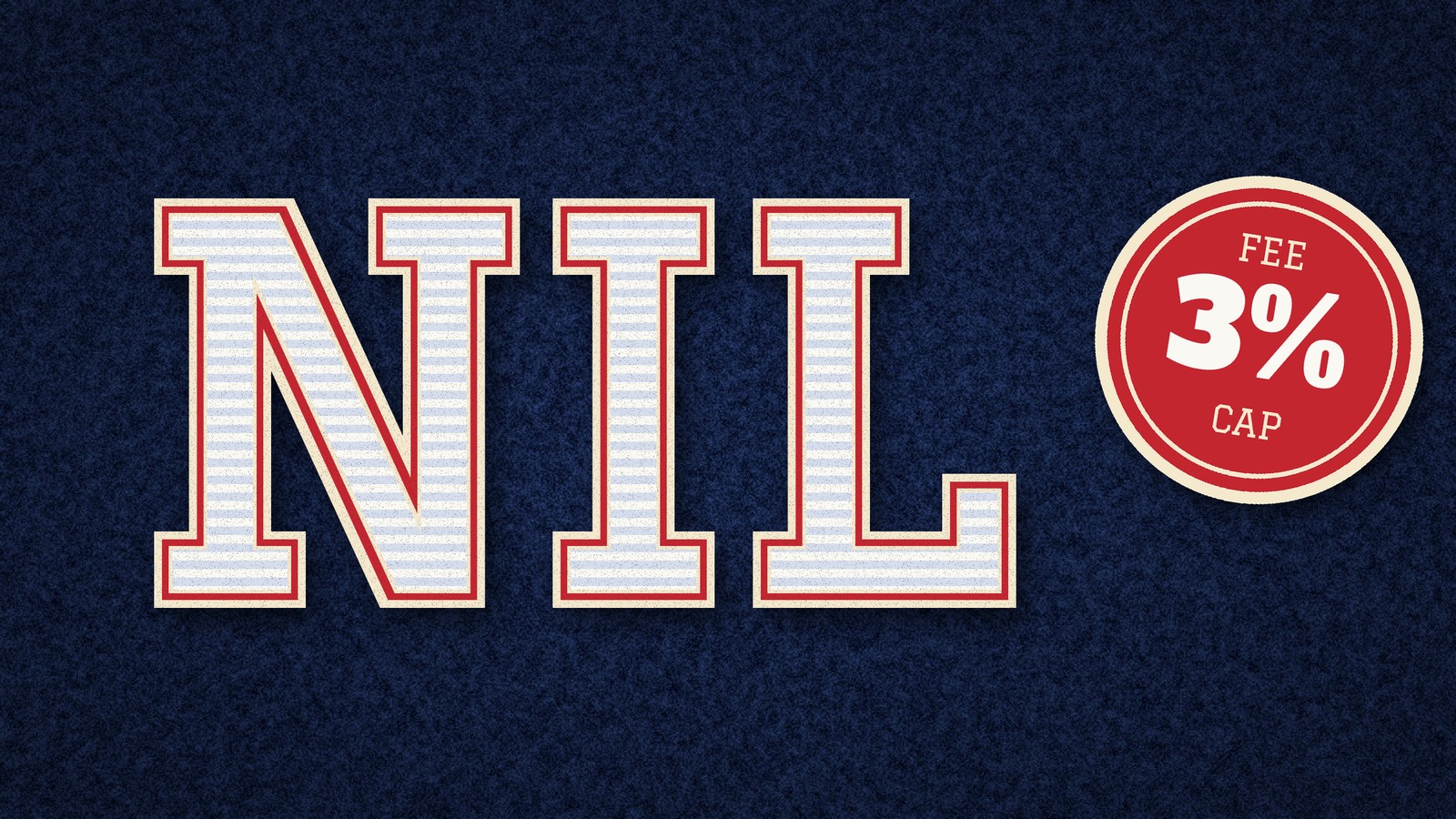
So here's what I'd like to see, in Louisiana and in every state that allows high school NIL, we need a hard cap on what an agent can charge a minor. I think that fee should be three percent.
The NFL Players Association caps agent commissions on player contracts at 3%. If the agents negotiating nine-figure deals for NFL quarterbacks can live on 3%, the agent who lands a local car dealership endorsement for a high school junior can too. Endorsement agents in the pros often charge more, it's true. But a pro is an adult with a union behind him. A high school junior does not have the luxury of these protections.
Mississippi’s next chance
States like Mississippi should be paying attention. High school NIL is still banned there. A bill that would have allowed it, paying athletes up to $10,000 a year directly and holding anything more in trust until 18 or graduation, died in committee in February without a vote. Coaches say the money is moving anyway. Raleigh coach Ryan Higdon told WLBT a competitor offered one of his players $2,000 to transfer.
"It's happening already," he said.
If Mississippi takes another run at this in 2027, it has a chance to write an agent cap in from day one.
I'm not too worried about Easton Royal. He's got a mother who's clearly paying attention and a coach in his corner. I'm thinking about the kid two towns over with a decent highlight reel, a few thousand followers, and nobody to read the contract.
Let's look out for the kids here.

John M. Fredericks is the chief operating officer of the John Fredericks Media Network’s sports division, which runs Disruptor Sports, and of WV Sports Nation. He is a doctoral student in Educational Policy and Evaluation at Arizona State University, where his research focuses on superintendent career paths, school board governance and the economics of education. Before graduate school, he taught AP Literature for five years in rural Mississippi and was named District Teacher of the Year. He is also a co-founder of Precision Policy Partners and lives in Tempe, Arizona.
This column was written by John M. Fredericks. It was fact-checked and copy edited by the Disruptor Sports desk working with Claude, a generative AI model made by Anthropic. How our newsroom works.

Comments